Pulse oximeter
Pulse oximeter
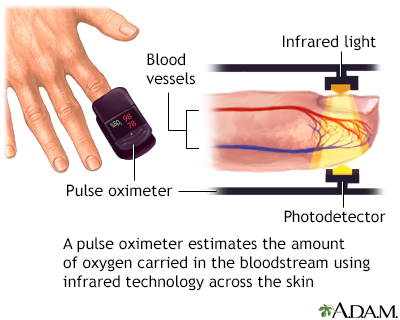
A pulse oximeter is a small device that measures your blood oxygen level. It does this by using beams of light, without the need for a blood sample. When placed on your finger, the pulse oximeter analyzes the light that passes through your finger to determine the percentage of oxygen in your red blood cells.
These devices can give an estimate of blood oxygen levels. Certain factors such as poor circulation, skin pigmentation, skin thickness or temperature, current tobacco use, and fingernail polish can all affect accuracy. For the best reading, make sure your finger is warm, relaxed, and held at a level below your heart. Remove any finger polish. Sit quietly during the reading. Your oxygen saturation level and heart rate will appear on a small screen on the top of the device. Pulse oximeters can be used monitor blood oxygen levels in case of illness such as COVID-19 or lung disease, such as asthma or COPD. Talk with your health care provider about how to use the pulse oximeter and what to do when levels drop too low.

Review Date:4/18/2024
Reviewed By:Linda J. Vorvick, MD, Clinical Professor, Department of Family Medicine, UW Medicine, School of Medicine, University of Washington, Seattle, WA. Also reviewed by David C. Dugdale, MD, Medical Director, Brenda Conaway, Editorial Director, and the A.D.A.M. Editorial team.
The information provided herein should not be used during any medical emergency or for the diagnosis or treatment of any medical condition. A licensed medical professional should be consulted for diagnosis and treatment of any and all medical conditions. Call 911 for all medical emergencies. Links to other sites are provided for information only -- they do not constitute endorsements of those other sites. © 1997-A.D.A.M., Inc. Any duplication or distribution of the information contained herein is strictly prohibited.

The Agency for Health Care Administration (Agency) and this website do not claim the information on, or referred to by, this site is error free. This site may include links to websites of other government agencies or private groups. Our Agency and this website do not control such sites and are not responsible for their content. Reference to or links to any other group, product, service, or information does not mean our Agency or this website approves of that group, product, service, or information.
Additionally, while health information provided through this website may be a valuable resource for the public, it is not designed to offer medical advice. Talk with your doctor about medical care questions you may have.